60-Second Summary
Mobile apps in healthcare help providers improve patient care through remote monitoring, telehealth, secure communication, and real-time access to patient data. They also streamline workflows, improve patient engagement, reduce operational costs, and support compliance with Singapore's healthcare regulations.
In this guide, you'll learn:
- What is driving mobile app adoption in healthcare
- Key business and clinical benefits
- Common use cases
- Singapore compliance requirements
- What executives should evaluate before investing
What Are Mobile Apps in Healthcare?
Mobile apps in healthcare are software solutions designed to support clinical care, simplify patient interactions, and improve healthcare operations. They allow healthcare providers and patients to securely communicate, manage appointments, monitor health remotely, and access medical information anytime through smartphones and tablets.
How Mobile Apps Are Transforming Patient Care?
Mobile apps in healthcare are transforming patient care by making healthcare more accessible, connected, and data-driven. They enable providers to monitor patients remotely, communicate securely, streamline clinical workflows, and deliver faster, more personalized care.
For healthcare organizations seeking a Healthcare App Solutions Company in Singapore, implementing secure, interoperable, and compliant mobile solutions is key to driving both operational efficiency and improved patient outcomes.
Why Are Mobile Apps Becoming Essential in Healthcare?
According to Singapore's Ministry of Health, more than 830,000 adults use the Healthy 365 mobile app every month, demonstrating the growing adoption of mobile health technologies to support healthier lifestyles and preventive care in Singapore.
Source: Ministry of Health Singapore, National Population Health Survey 2024.
Market adoption of mobile apps in healthcare
Healthcare organizations worldwide are rapidly embracing mobile apps in healthcare. From hospitals and clinics to home-based care, mobile solutions enable real-time communication, remote monitoring, and patient engagement. The global digital health market is expanding, reflecting the growing recognition of mobile apps as a strategic tool rather than a supplementary technology.
Why healthcare leaders are prioritizing mobile-first care
As mobile technology in healthcare advances, providers are increasingly relying on secure, interoperable platforms rather than standalone systems. This shift allows for better data flow, improved care coordination, and strategic decision-making across the organization.
C-suite executives are increasingly focused on mobile-first care because it improves operational efficiency, reduces patient wait times, and supports data-driven decision-making. Mobile apps in healthcare allow leadership teams to monitor performance metrics, enhance patient satisfaction, and stay ahead in an increasingly competitive market.
Enhancing Patient Care with Mobile Apps in Healthcare
Enhancing patient engagement and accessibility
Mobile apps in healthcare provide patients with secure access to health records, appointment scheduling, and personalized health information. These tools empower patients to actively manage their care, improving engagement and adherence to treatment plans.
Enabling remote monitoring and virtual care
With mobile technology in healthcare, clinicians can monitor chronic conditions, track vital signs, and deliver telehealth consultations. This reduces hospital visits, supports proactive interventions, and increases patient convenience.
Supporting data-driven clinical decisions
Mobile apps enable providers to collect and analyse patient data in real time. This empowers clinicians to make informed decisions, identify early warning signs, and customize care plan, ultimately improving patient outcomes.
What Are the Benefits of Mobile Apps in Healthcare?
Mobile apps in healthcare improve operational efficiency, enhance patient engagement, strengthen care coordination, and reduce administrative costs, making them a strategic investment for healthcare organizations.
Operational efficiency and workflow optimization
Mobile apps in healthcare improve operational efficiency by:
- Automating routine administrative tasks
- Replacing manual documentation with digital workflows
- Streamlining clinical workflows
- Giving healthcare professionals more time to focus on patient care
Better care coordination and communication
Healthcare teams can collaborate more efficiently through mobile applications.
Key capabilities include:
- Secure messaging
- Shared patient records
- Real-time care coordination
- Faster communication across departments
Cost optimization and scalable care delivery
Healthcare organizations benefit by:
- Lowering administrative costs
- Reducing unnecessary hospital visits
- Scaling digital healthcare services
- Improving long-term operational efficiency
Traditional Healthcare vs Mobile Apps in Healthcare
Traditional Healthcare | Mobile Apps in Healthcare |
| Phone appointment booking | Mobile appointment scheduling |
| Paper-based records | Digital patient records |
| In-person follow-ups | Remote patient monitoring |
| Delayed communication | Secure real-time messaging |
| Reactive care | Continuous patient engagement |
How Are Mobile Apps Used in Healthcare Today?
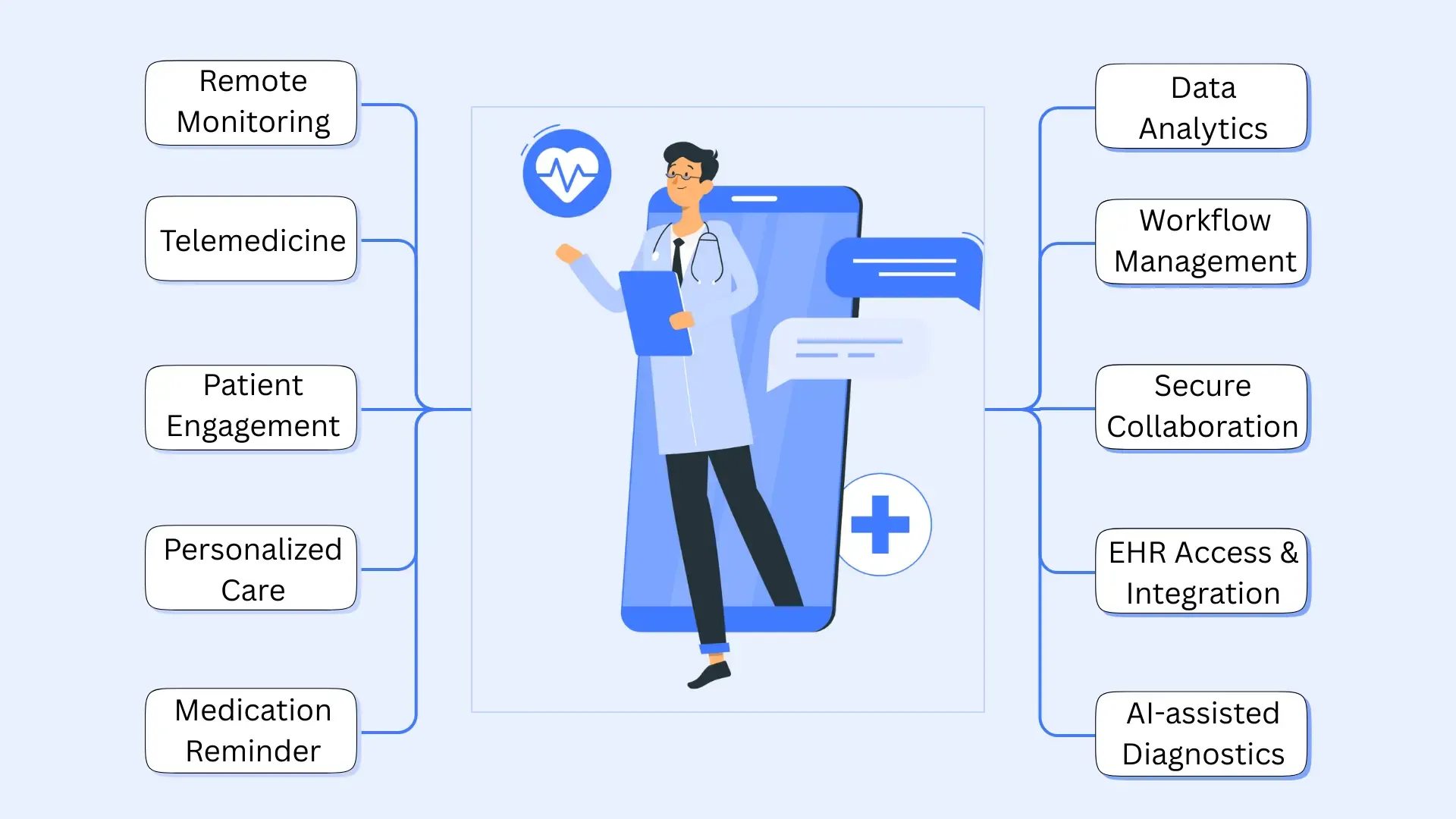
Figure: Key Use Cases of Mobile Apps in Healthcare
Remote patient monitoring and chronic care management
Mobile apps enable continuous monitoring of patients with chronic conditions, improving adherence to treatment and early detection of complications.
Secure patient–provider communication platforms
Real-time messaging and telehealth features enhance communication, ensuring patients remain connected with their care teams.
mHealth apps for preventive and personalized care
mHealth apps provide wellness tracking, diet and exercise recommendations, and preventive health insights, encouraging healthier lifestyles and proactive care.
Mobile Apps in Healthcare and Regulatory Compliance in Singapore
PDPA and healthcare data protection requirements
Healthcare apps in Singapore must comply with the Personal Data Protection Act (PDPA), ensuring patient information is collected, stored, and shared securely.
Security, interoperability, and audit readiness
Compliance-ready mobile apps maintain robust security standards, support seamless integration with Electronic Health Records (EHRs) using interoperability standards such as HL7 FHIR, and are designed to meet Singapore's Personal Data Protection Act (PDPA) requirements. This helps healthcare organizations exchange patient information securely while remaining audit-ready.
Why compliance-ready mobile healthcare solutions matter in Singapore
For healthcare leaders, choosing mobile apps that meet local regulations mitigates legal risks, builds patient trust, and positions organizations as responsible, forward-thinking providers.
Healthcare Mobile App Evaluation Checklist
Before selecting a healthcare mobile app, ask:
Executive Insight
Mobile apps deliver the greatest business value when they are integrated with existing healthcare systems rather than implemented as standalone solutions. Healthcare leaders should prioritize interoperability, security, regulatory compliance, and clinician adoption from the outset to maximize adoption, reduce implementation risks, and achieve long-term ROI.
Why Healthcare Organizations Choose Fortunesoft?
Whether you're building a patient engagement app, telemedicine platform, remote patient monitoring solution, or custom healthcare mobile application, success depends on choosing a technology partner with deep healthcare expertise. Fortunesoft helps healthcare organizations in Singapore design, develop, and modernize secure, scalable, and compliance-ready mobile solutions that align with long-term business goals.
Healthcare organizations partner with Fortunesoft because we offer:
- 17+ years of experience developing Healthcare App Development Company in Singapore
- PDPA-compliant healthcare application development
- Secure and scalable mobile app architecture
- EHR, HL7 FHIR, and third-party system integration
- End-to-end product engineering
- Long-term technology partnership
What Is the Future of Mobile Apps in Healthcare?
AI-driven care, interoperability, and patient-centric ecosystems will continue to shape mobile apps in healthcare. Advanced analytics, predictive modelling, and integrated platforms will allow organizations to deliver personalized, proactive care while maintaining compliance and efficiency.
As AI, IoT devices, wearable health technologies, and interoperable healthcare ecosystems continue to evolve, mobile apps will become the central interface connecting patients, providers, and healthcare data in real time.
Key Takeaways
- Mobile apps improve patient engagement and healthcare accessibility.
- Remote monitoring enables proactive and continuous care.
- Secure communication strengthens collaboration between patients and providers.
- PDPA-compliant mobile apps help healthcare organizations protect sensitive patient data.
- Choosing the right healthcare technology partner is critical for long-term success.
Conclusion
As healthcare organizations continue to embrace digital transformation, investing in secure, scalable, and compliant mobile applications has become a business necessity rather than a competitive advantage. If you're looking to build or modernize a secure, scalable, and PDPA-compliant healthcare mobile application, Fortunesoft can help you accelerate development while ensuring seamless integration, regulatory compliance, and long-term scalability.