
 Facebook
 Whatsapp
 LinkedIn
 Pinterest
How to integrate EHR with Med Devices?
Healthcare systems today are increasingly reliant on medical device integration with EHR to improve patient care, optimize workflows, and enable real-time clinical decision-making. As care delivery becomes more data-driven, organizations are turning to specialized Medical device software integration services to ensure that medical devices connect securely and reliably with Electronic Health Records (EHR).
This integration enables seamless data flow, reduces manual errors, supports continuous monitoring, and strengthens regulatory compliance.
This blog explains how EHR–med device integration works, the standards involved, key challenges, best practices, and why choosing the right integration partner matters.
Medical Device EHR Integration in Modern Healthcare Systems
Effective medical device EHR integration allows healthcare providers to access accurate, real-time patient data from devices directly within the EHR. This integration is no longer optional but essential for hospitals, clinics, and telehealth platforms aiming for streamlined operations.
Role of Medical Devices in Modern EHR Ecosystems
Medical devices capture critical patient data – vitals, lab results, imaging, and monitoring metrics, which form the backbone of the EHR. Integration ensures that clinicians can make informed decisions without manual data entry, reducing errors and administrative overhead.
Types of Medical Devices Commonly Integrated with EHRs
- Patient monitors (heart rate, blood pressure, oxygen saturation)
- Infusion pumps and ventilators
- Imaging devices (MRI, CT, X-ray)
- Wearable health trackers and remote monitoring devices
- Laboratory instruments
Each device type requires specific protocols and mapping to ensure accurate, timely data in the EHR.
How EHR–Medical Device Integration Works (High-Level Architecture)
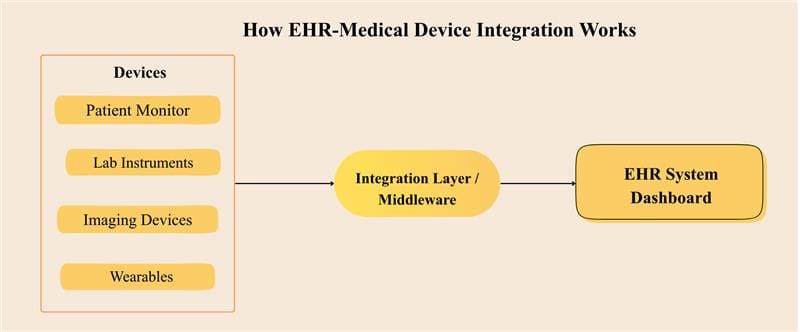
The integration process combines devices, software layers, and EHR systems to enable seamless data flow.
Data Flow from Medical Devices to the EHR
Data is captured by the device, transmitted via secure channels, validated, and stored in the EHR database, ensuring clinicians see accurate, current information.
Device Interfaces, Middleware, and Integration Layers
Middleware platforms often act as translators between device-specific data formats and EHRs, enabling interoperability while maintaining data integrity.
Real-Time vs Batch Data Synchronization
- Real-time integration: Immediate updates for critical metrics (e.g., ICU monitors)
- Batch integration: Periodic data uploads suitable for less time-sensitive devices
Both approaches require careful planning to maintain data accuracy and clinical reliability.
Standards and Protocols Used for Medical Device EHR Integration
Successful integration relies on industry standards to ensure compatibility and interoperability.
1. HL7 for Clinical Data Exchange
Health Level Seven (HL7) standards facilitate structured clinical data transfer between devices and EHRs.
2. FHIR for Modern EHR Integration
Fast Healthcare Interoperability Resources (FHIR) supports modern, API-driven data exchange, enabling flexible, scalable integration.
3. DICOM and Device-Specific Standards (Where Applicable)
Digital Imaging and Communications in Medicine (DICOM) and device-specific protocols standardize imaging and specialized device data.
Step-by-Step Process to Integrate Medical Devices with an EHR
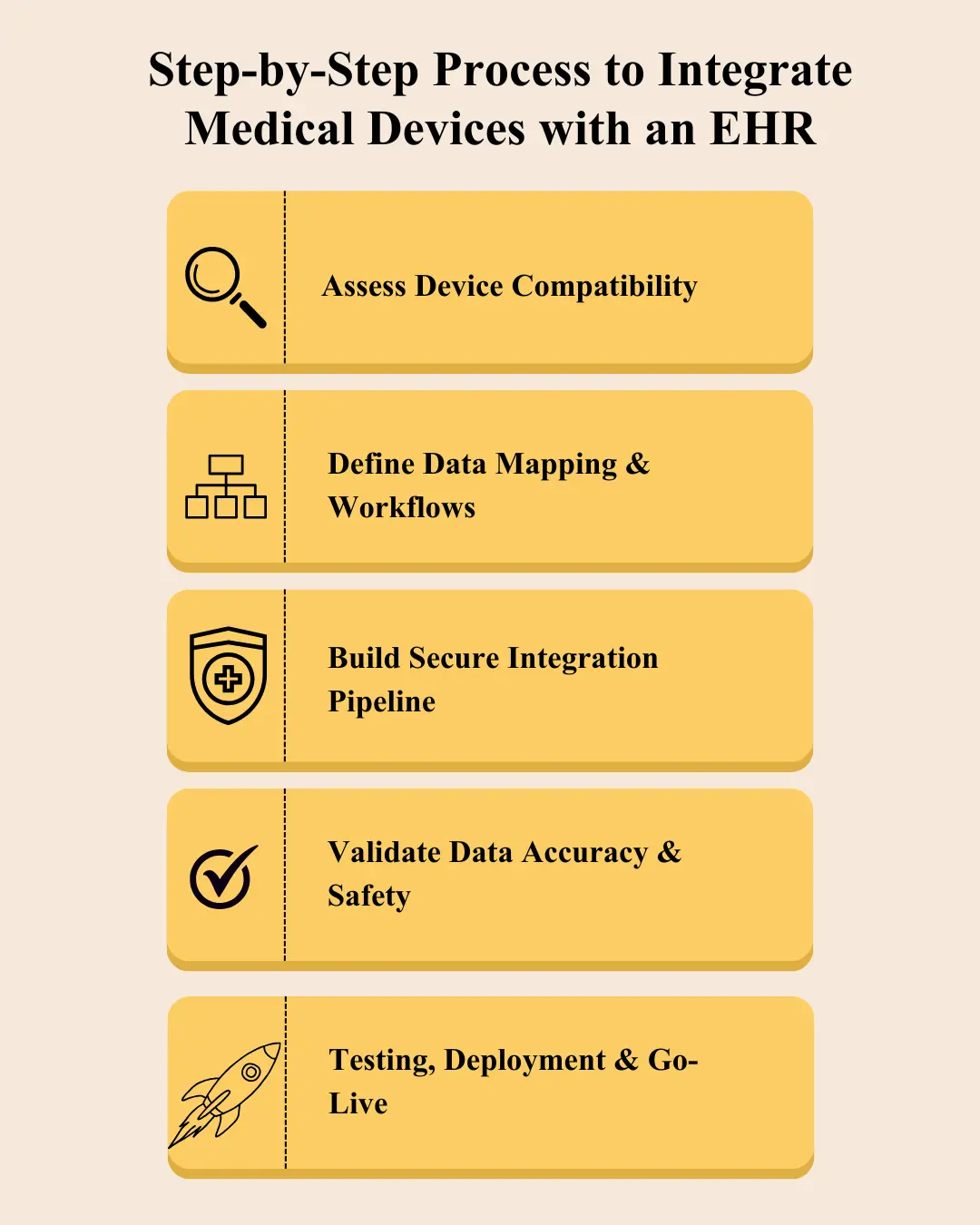
1. Assess Device Compatibility and EHR Capabilities
Evaluate device communication protocols, supported data formats, and EHR interoperability options.
2. Define Data Mapping and Clinical Workflows
Map device outputs to EHR fields while aligning with clinical workflow needs for seamless usability.
3. Build and Configure Secure Integration Pipelines
Implement secure channels for data transmission, considering encryption, authentication, and fail-safes.
4. Validate Data Accuracy and Clinical Safety
Test data flows rigorously to ensure correctness, completeness, and patient safety compliance.
5. Testing, Deployment, and Go-Live Readiness
Conduct pilot runs, address issues, and train clinical staff before full deployment.
Key Challenges in Medical Device Integration with EHR Systems
1. Interoperability and Data Standardization Issues
Differences in device protocols can cause data mismatches if not standardized properly.
2. Device and Vendor Compatibility Constraints
Legacy devices or proprietary systems may require specialized interfaces or middleware.
3. Data Security, Privacy, and Access Control
Protecting patient information is critical; access must comply with HIPAA and organizational policies.
4. Managing Integration Complexity at Scale
Large healthcare networks face challenges connecting multiple device types across departments.
Compliance and Regulatory Considerations
1. HIPAA and Patient Data Protection
Ensure that all integrations comply with privacy regulations and maintain secure data access.
2. FDA Regulations and Medical Device Software Oversight
Medical devices with software components may require regulatory approvals; integration must adhere to guidelines.
3. Audit Trails, Validation, and Clinical Governance
Maintain records for every data transaction and validate integrations for clinical safety and accountability.
Best Practices for Successful EHR and Medical Device Integration
1. Design for Interoperability from Day One
Plan integration strategies early, considering future devices and evolving EHR capabilities.
2. Prioritize Clinical Workflow Alignment
Ensure data flows support the way clinicians work, avoiding workflow disruptions.
3. Plan for Scalability and Future Device Additions
Integration architecture should accommodate new devices and upgrades without major redesigns.
4. Work with Healthcare Integration Specialists
Expertise ensures compliant, efficient, and reliable integration with minimal disruption.
Choosing Fortunesoft as a Partner for Medical Device EHR Integration
Why Healthcare Integration Experience Matters
Medical device EHR integration is not just a technical exercise, it requires a deep understanding of device protocols, clinical workflows, data standards, and regulatory requirements. Working with an experienced Medical device software integration company helps healthcare organizations reduce implementation risk, ensure data accuracy, and accelerate time-to-value while maintaining compliance.
How Fortunesoft Supports Secure, Compliant EHR Integrations
Fortunesoft provides end-to-end integration support, including consulting, architecture design, secure implementation, validation, and ongoing optimization. As a trusted healthcare technology partner, Fortunesoft helps organizations build scalable, compliant solutions that ensure medical device integration with EHR aligns with both clinical and regulatory standards.
Conclusion
Integrating medical devices with EHR systems is critical for modern healthcare delivery. By following standards, best practices, and working with experienced partners like Fortunesoft, healthcare organizations can unlock real-time insights, reduce errors, and enhance patient care.
FAQs
Q1. What is medical device EHR integration?
A1. It is the process of connecting medical devices to EHR systems so that patient data is transmitted automatically and accurately for clinical use.
Q2. Which devices can be integrated with EHRs?
A2. Common devices include patient monitors, infusion pumps, imaging systems, wearable trackers, and lab instruments.
Q3. What standards are used in integration?
A3. HL7, FHIR, DICOM, and device-specific protocols ensure interoperability and data accuracy.
Q4. How long does integration take?
A4. Duration depends on device types, EHR compatibility, and workflow complexity, ranging from a few weeks to several months.
Q5. What are the main challenges?
A5. Interoperability, vendor compatibility, data security, and managing complexity at scale are the top challenges.
Q6. How can hospitals ensure compliance?
A6. By following HIPAA, FDA guidelines, maintaining audit trails, and validating clinical safety throughout integration.
Q7. Why choose Fortunesoft for integration?
A7. Fortunesoft provides end-to-end expertise in EHR and device integration, ensuring secure, compliant, and scalable solutions.
Author Bio





Related Blog



3 min read
10 benefits of investing in digital healthcare application development in 2024
min read
athenahealth EHR to make Microsoft Dragon Copilot available to clinicians




 Start Chat